Thursday, October 30, 2008

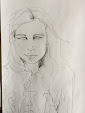
Jamie Wyeth

Automaton, 1979
Mischief Night, 1986

Giuliana and the Sunflowers, 1987


Pumpkinhead - Self-Portrait, 1972.
James Wyeth (1946- ) Born in Pennsylvania and is the son of the famous painter, Andrew Wyeth and grandson of another famous painter, N.C. Wyeth. He is known as part of the 'Brandywine Tradition' which is a group of painters who worked in the countryside of Delaware and Pennsylvania. He has been influenced by the methods and styles of his family as well as the Flemish and Dutch masters. He was also influenced by Winslow Homer and Thomas Eakins. During the 1970s he did many portraits of famous people including Jimmy Carter, Nureyev and Andy Warhol.
These images were taken from a beautiful book, Wondrous Strange, The Wyeth Tradition, published by Bulfinch.

BIG FIBER ART SALE GOING ON IN MY ETSY SHOP... CHECK IT OUT!

Wednesday, October 29, 2008

Rogier van der Weyden

The Visitation by a follower of Rogier van der Weyden, Flemish. 2nd half of the 15th century. Tempera and oil on wood, 33 x 16 in. The Cloisters Collection, Metropolitan Museum of Art, NYC.

(c. 1399-1464) The outstanding Netherlandish painter of the mid-15th century. He was one of the greatest and most influential European artists of his time, but there is little secure knowledge about his career. None of the surviving paintings associated with him are signed, dated, or verified by indisputable contemporary documentation, but several can be identified from early sources, and the style these show is so distinctive that a coherent oeuvre has been built up around them His early career, however, is still a particularly problematic area, as the sparse evidence relating to it is teasingly equivocal.
Rogier's reputation rests mainly on his religious works, which are remarkable for their magisterial power of design and their emotional intensity and sensitivity. He was know to have felt and expressed emotions and sensations - mostly of a bitter or bittersweet nature-that no painter had ever recaptured.
He had many assistants and pupils and ran a busy workshop. His pictures were exported to France, Germany, Spain and Italy (where he was one of the few northern artists of the time to be highly regarded), and many of the types and motifs he invented or popularized became part of the common currency of artistic ideas until well into the 16th century. He is also known as Rogier of Bruges. (Ian Chilvers)

Monday, October 27, 2008

Movement in Art

Movement - In art, movement may be actual or implied. Generally, it refers to the direction of lines, forms, or relation of colors that leads the eye over the composition. (Ralph L. Wickiser)

Sunday, October 26, 2008

Henri Toulouse-Lautrec

A Country Outing, 1882. Oil on canvas, 18 1/8 x 15 in. Phillip and Janice Levin Collection.
Henri Marie Raymond de Toulouse-Lautrec (1864-1901). French artist, associated with the Impressionists. His later work was to prove vital to the development of poster art. Toulouse-Lautrec was born at Albi (where there is now a museum of his work) in the South of France. He showed an early gift for drawing, to which he turned increasingly after a riding accident at the age of 15 left him with crippled and stunted legs. In 1882 he began to study art in Paris. He admired Goya's etchings and Degas' work, and in the 1880's he met Gauguin and was inspired by Japanese prints. Lautrec became a familiar figure drawing and paintings in the dance halls, theatres, cafes, circuses, and brothels. He often painted with thinned-out oils on cardboard. (Brockhampton)

This particular painting is unusual for Lautrec - he is well known for his works featuring Parisian nightlife. This painting was in his early period and reflected scenes of country life among the wealthy as he was from a privileged background.

Saturday, October 25, 2008

Will Barnet

3 Chairs, 1991-92. Oil on canvas, 43 x 53 1/2 in. Private Collection
Vigil, 1974-75. Oil on canvas, 48 x 67 1/2 in. Private collection.

The Blue Robe, 1962. Oil on canvas, 50 x 54 in. Private Collection


The Lesson, 1984. Oil on canvas, 71 x 33 1/2 in.


Will Barnet (American born 1911) has profoundly influenced 20th century art. His works are simple yet elegant, tinged with mood. He explores social realism, abstraction, and modernism, all the while playing to fleeting emotions. His images invite reflection, evoke nostalgia, and recall poignant memories.
Grounded in classical sensibilities, the artist is always searching for clarity and harmony as he offers interpretation of life's events. What could be the mundane become the important moments of both the view and the subject.
Barnet studied at the School of Museum of fine Arts in Boston and the Art Students League in New York. He has taught at the Art Students League, Cooper Union, the Pennsylvania Academy of the Fine Arts, Cornell and Yale Universities, and other schools. His paintings and prints, spanning social realism, abstraction, figurative work, and modernism, are in prestigious collections worldwide. (author unknown but published by Pomegranate.)

Thursday, October 23, 2008

Tenebrism

Artemisia Gentileschi, Judith and Maidservant with the Head of Holofernes, c. 1625. Oil on canvas, approx. 6' x 4' 8". Detroit Institute of the Arts (gift of Leslie H. Green).
Caravaggio, Calling of St. Matthew, circa 1597-1601. Oil on canvas, 11' 1" x 11' 5". Contraelli Chapel, San Luigi dei Francesi, Rome.

Painting in the tenebroso or 'dark manner,' using violent contrasts of light and dark, as in the work of Caravaggio. (Frederick Hartt)

Tuesday, October 21, 2008

Genius

Antonio Rossellino. Tomb of the Cardinal of Portugal. 1460-66. White and colored marbles with traces of polychromy and gold, width of chapel wall 15' 9". Chapel of the Cardinal of Portugal, San Miniato, Florence.

(Plural genii) In Roman and Renaissance art, usually the guardian spirit of a person, place, or thing, though it may be purely decorative. Genii are represented in human form, frequently seminude and winged; note the genii on the base of the tomb of the Cardinal of Portugal above. (Frederick Hartt)